The Cat’s Whiskers
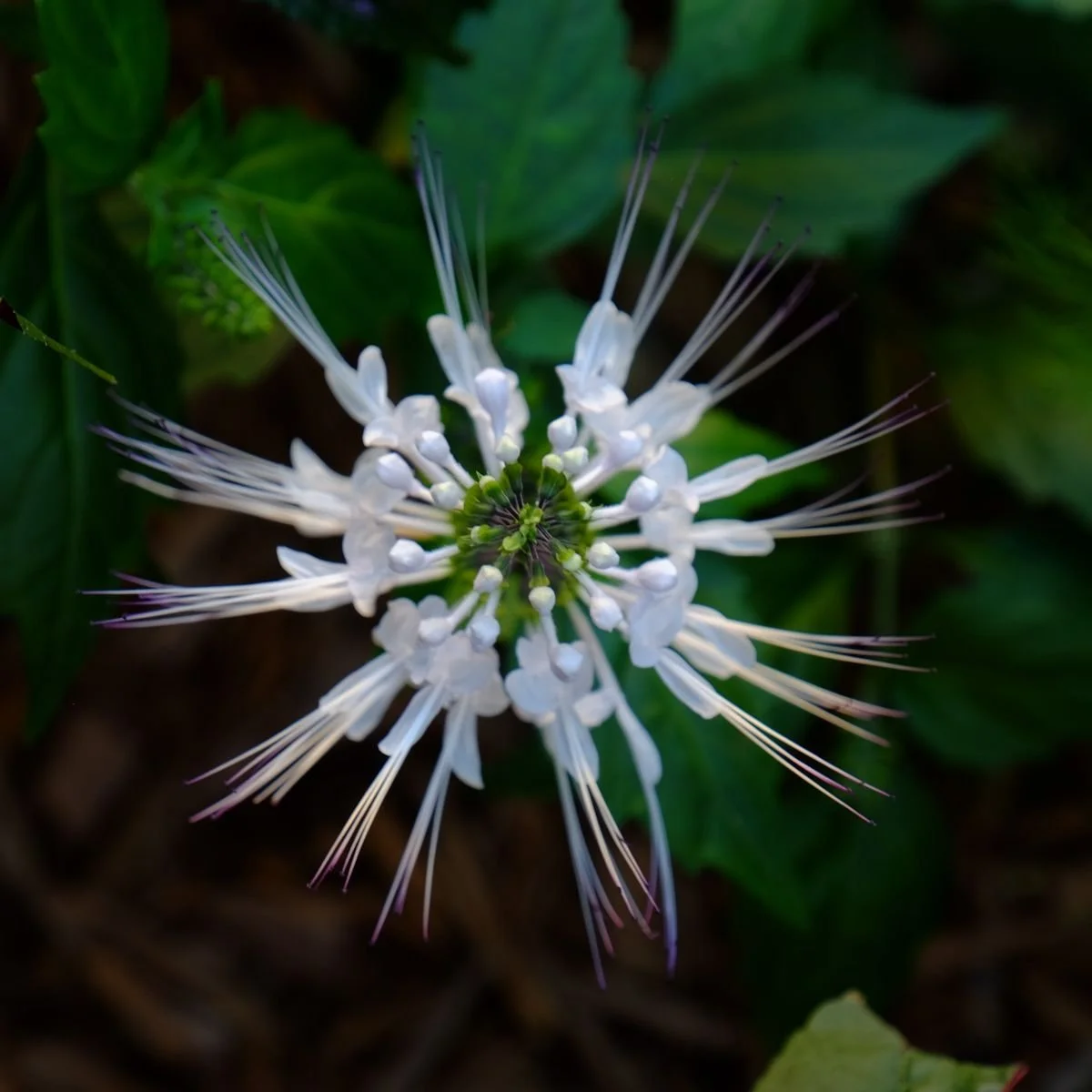
Cat’s whiskers is the perfect name for Orthosiphon aristatus. The inflorescence are concical shaped racemes of small tubular flowers that all have beauifullly delicate whispy stamens that are far longer as the flowers themselves - and look just like cat’s whiskers! In Indonesia the plant is called ‘kumis kucing’ and in Malaysia, ‘misai kucing’ - both of which directly translate to cat’s whiskers. Universal approval of what they look like!
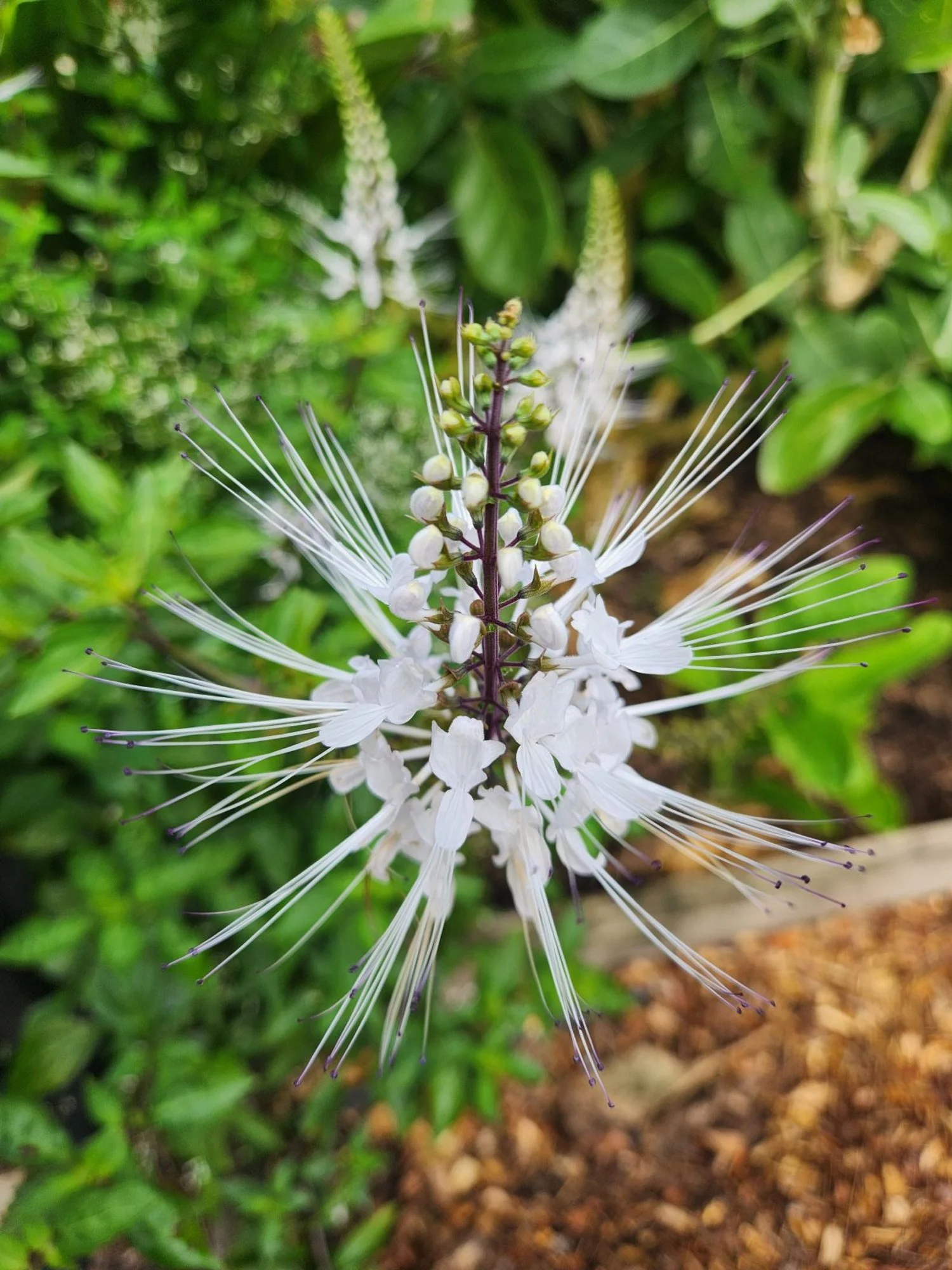
The scientific name Orthosiphon aristatus is derived from Ortho (straight) and siphon (tube) which is in reference to the straight tube of the flower. I’ve always thought aristatus meant ‘ear’ and could never understand where they got that from, but on further investigation it’s more like ‘ear of corn’ or awned/bearded/bristly and is referencing the stamen/whisker. Makes much more sense!
Orthosiphon aristatus is native to northern Australia and other close Southeast Asian countries. It’s also called Java tea and is drunk (both traditionally and available commerically) to support kidney function and detoxification. It’s said to taste a bit like green tea. Yet again the tea is something I haven’t tried, because personally I just love them as an ornamental. They flower profusely from summer through to autumn and are delicate and beautiful and as long as they get plenty of water, quite low maintenace. The more water they have the more sun they can take, but they are happiest in a part shade/dappled light location so perfect for a damp lightly shaded corner.
They are a smallish shrub, about 1.5m high and no wider with the typical square stems of a member of Lamiaceae (the mint family) and mid-green leaves with serrated edges. All rather common really, until it flowers. There is a white flowered version, with the whiskers tinged purple at the tips, and a mauve flowered version, although the stamens are still pale at the flower end with darker purple tips. I have found the mauve version doesn’t grow as strongly, so I only have white now. It is easily propagated by cuttings in warm weather and I have had the odd one self-seed. Another good reason to learn your seedling identification!
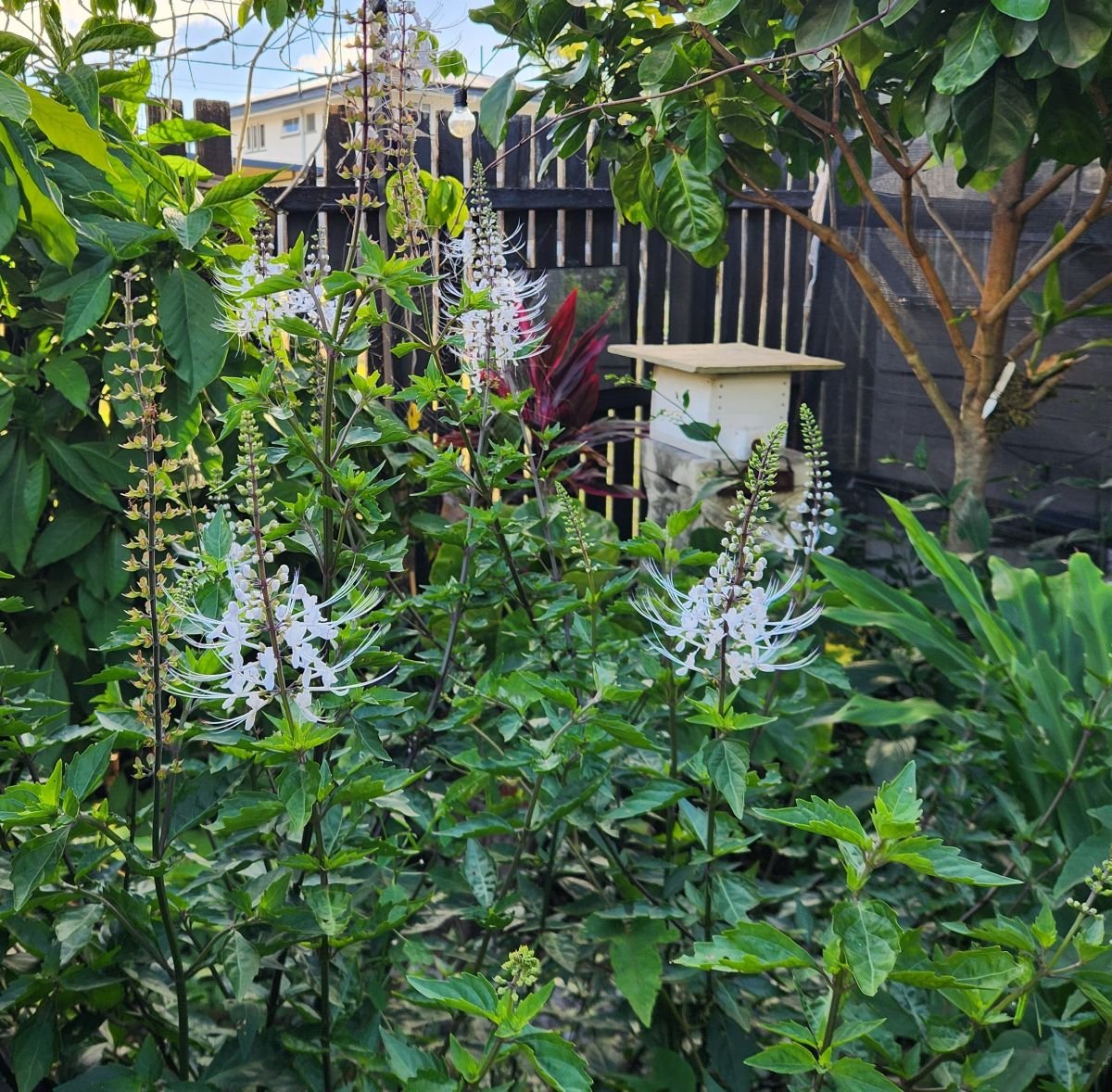
The plant can get a bit scraggly over winter but responds well to a good cutback to keep it bushy. If you’re in a cooler region it may loose leaves and they are not at all frost tolerant.
It makes a great cut flower and adds that sense of whimsy to a posy. If you’re lucky your stem may even send out roots while in the vase - now who doesn’t love a free plant!