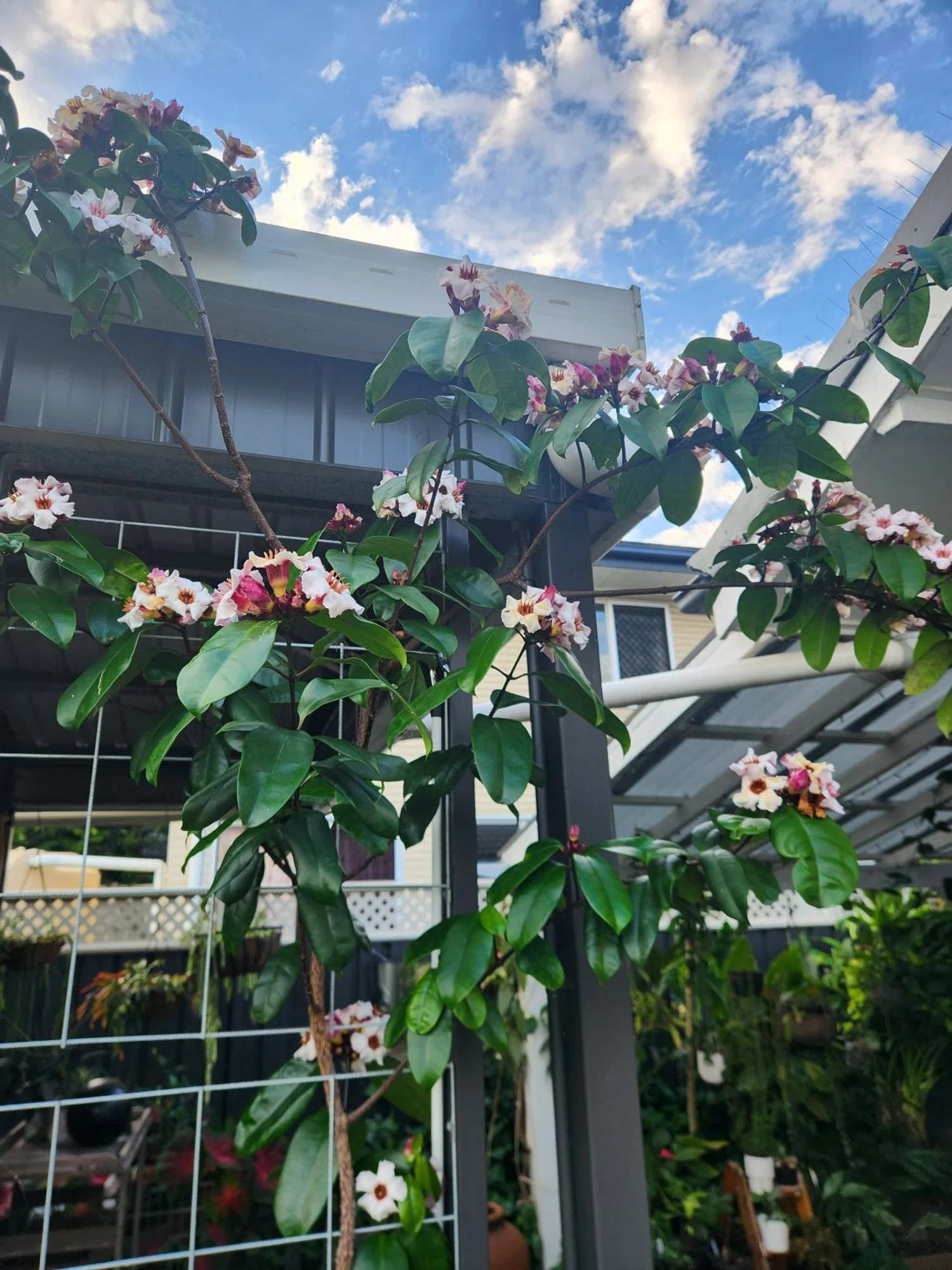
Strophanthus gratus
My climbing oleander is covered in flowers and looking stunning but I’ve been patiently waiting for the long ‘dangly bits’ that I remember seeing in Cairns, where I first fell in love with this plant. I’ve had mine for a couple of years and until now, it has only had a few flowers. I somehow assumed the ‘dangly bits’ must come with age but I finally decided to google it. And do you know what I found? I’ve got the wrong plant! My ‘climbing oleander’ is Strophanthus gratus. (Note: it’s not an oleander at all). The ‘climbing oleander’ I remember seeing in Cairns is Strophanthus preussii. Whoops! (I’ve also figured out that the long ‘dangly bits’ are the tips of the petals).
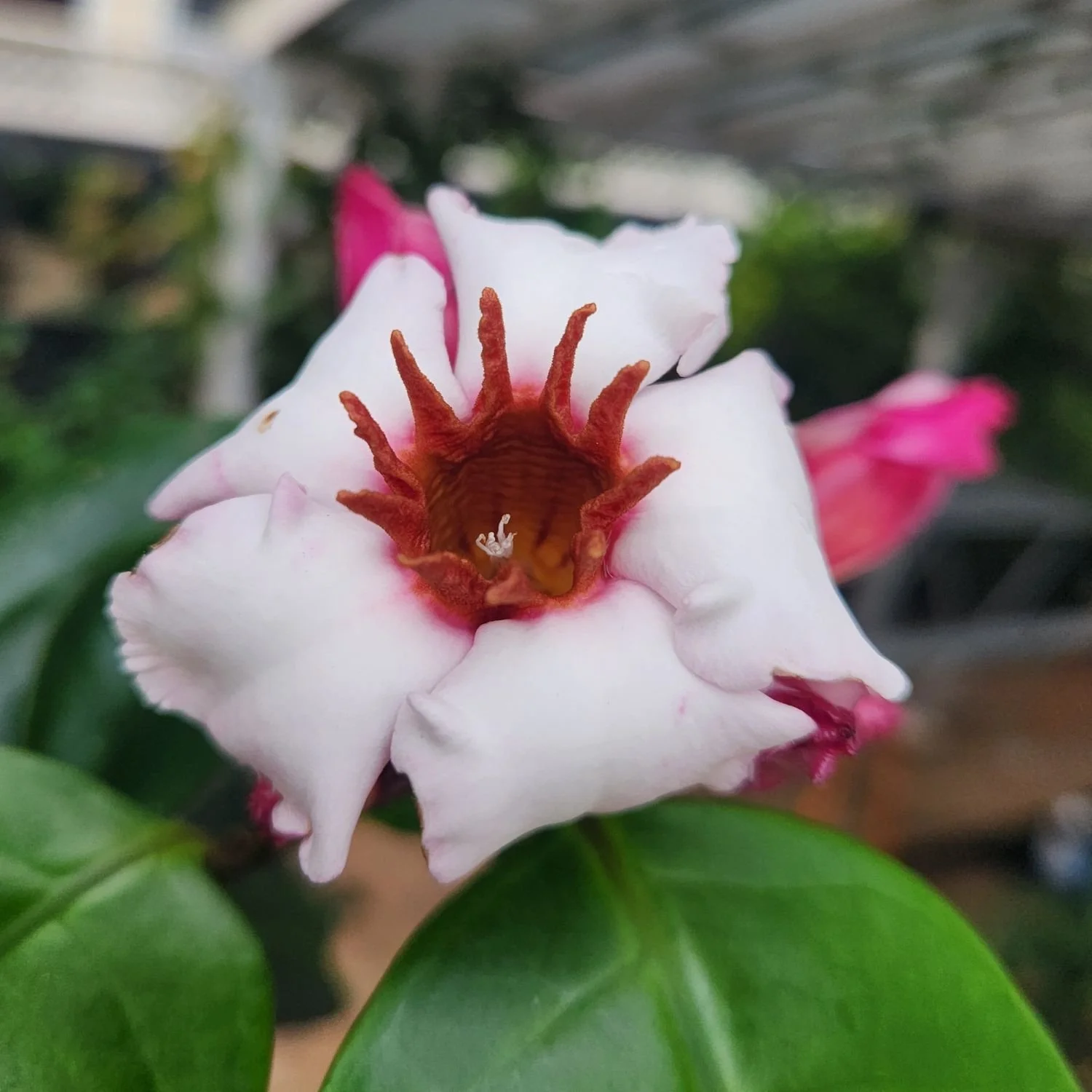
Casting my mind back to when I bought mine, at a local open garden, I remember his didn’t have the long dangly bits either, but other than that the flowers looked just as I remembered so I assumed they just hadn’t developed yet. And it’s never occured to me to follow up on that! Embarrasing.
Never mind. I still love mine.
Strophanthus gratus (as with S. preussii) is a liana (woody climber) native to west tropical Africa.. The leaves are glossy green and the flowers are lightly frangrant with hints of rose. As the common name suggests, they do resemble oleander flowers and they are in the same family - Apocynaceae. They have a deep burgandy throat, creamy white petals and a very cool corona, which is the ring of protuding parts surrounding the centre of the flower. Not all flowers have a coronoa (which means ‘crown’) - some examples that do are the trumpet part on a daffodil, or the ring of frilly bits on a passionfruit flower.
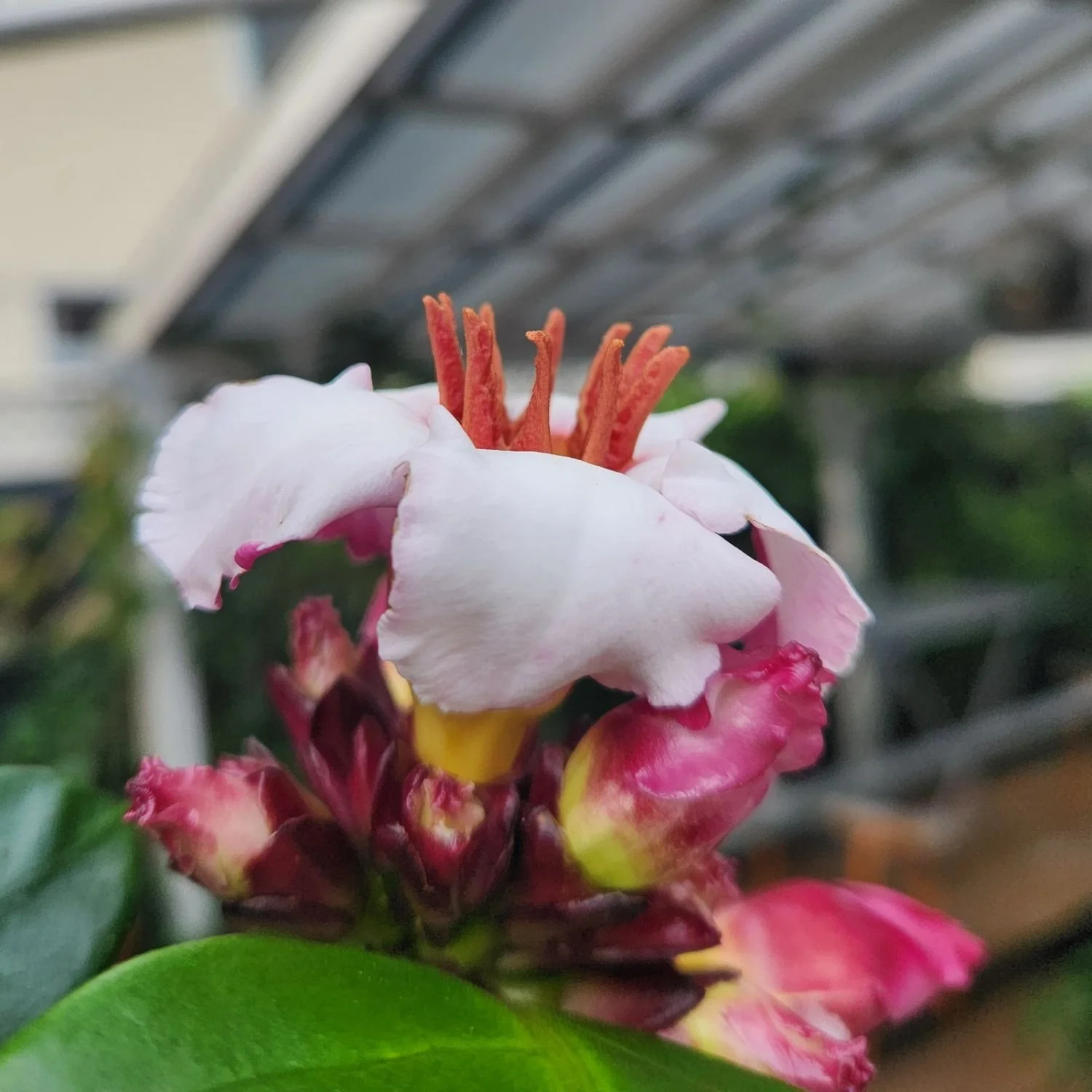
All members of Apocynaceae are poisonous and Strophanthus aren’t an exception. Apparently they make good arrow poison, but also have (possibly debated) medicinal properties. Once again I’m thankful to those that figured these things out before me. What came first? “Oh let’s see if this arrow poison will cure my….” or “I know! Let’s shoot the enemy with this helpful medicine”.
Luckily I don’t plan on eating mine or crafting historic weapons. I’m content with growing it for its wonderful ornamental value. Strophanthus like a moist, well drained spot in full sun to part shade and something to scramble up - although with judicious pruning you can keep them shrub like. They aren’t a super fast climber either, which is nice for a change. I spend more time enjoying them than pruning them!