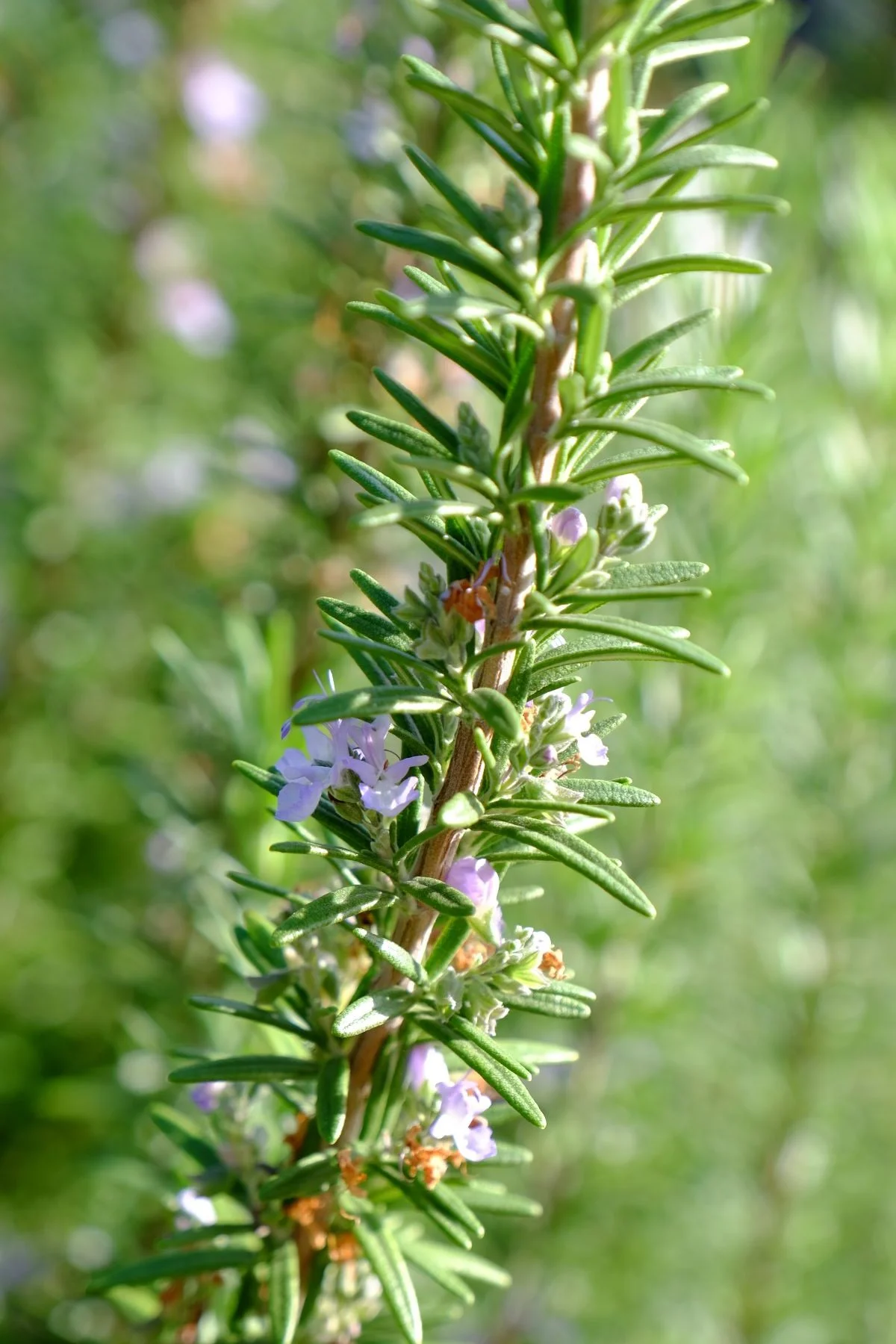
Rosemary is for Remembrance
Rosemary has long been associated with memory. Greek scholars wore it in their hair while they studied and Roman culture used rosemary in tombs and funerals to remember the deceased.
These days, we (Aussies!) wear sprigs of rosemary to remember the fallen on both ANZAC Day and Rememberence Day. Rosemary has particular significance for ANZAC day because rosemary grows wild on the Gallipoli Peninsula.
As is often the case, traditional practices have now been backed up by science and modern research has found that inhaling certain compounds (1,8-cineole) in rosemary enhances the level of a neurotransmitter (acetylcholine) responsible for memory and concentration. This also has the potential to help prevent neurodegenerative diseases like Alzheimer’s.
As a plant, rosemary (Salvia rosmarinus syn. Rosmarinus officinalis - don’t get me started on the name change!) is tough. It’s a member of Lamiaceae or the mint family - and we all know how tough mint is. Only rosemary is tough in the opposite way. Its native habitat is the hot, dry, rocky coastlines of the Mediterranean. So if you have a spot in full sun, bad soil with poor irrigation - rosemary is your answer! If you have a more goldilocks garden just pick a spot with as much sun as possible and as long as it’s not boggy, you should be fine. It also grows well in a pot. There are also lots of varieties - from towering 1.5m+ cultivars such as ‘Tuscan blue’ to shorter compact plants like ‘Roman beauty’ and even prostrate gound covers. Typically the flowers are a pale mauve - blue colour but you can also find a pale pink and a white version. Pick a taller growing variety and strip the leaves to make good barbeque skewers, or add the leaves of any of the varieties to your lamb or garlic flatbread for homegrown deliciousness.