Queens and Bishops
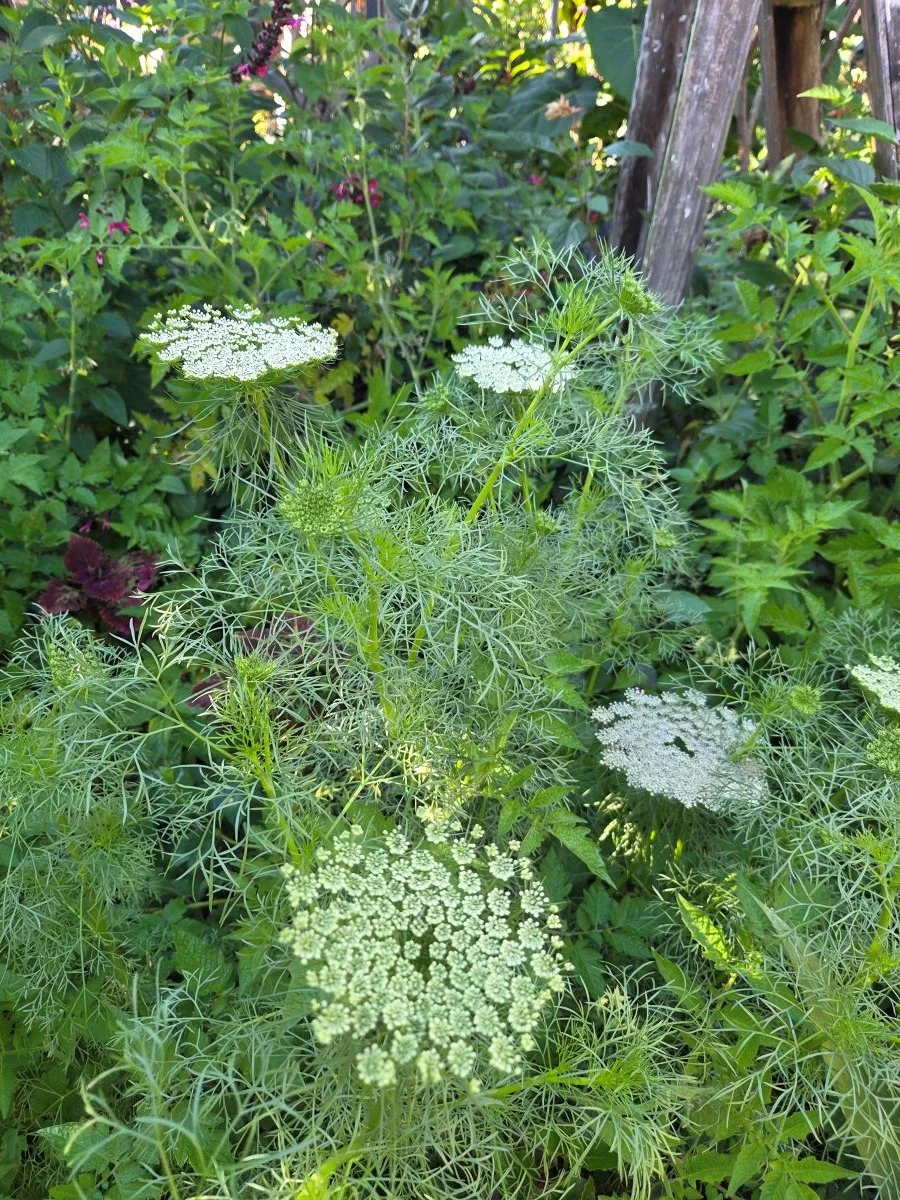
I call it Queen Anne’s Lace. Although apparently, it’s False Queen Anne’s Lace. Or Bishop’s Flower. Or False Bishop’s Weed. Common names are confusing! But I’m here to talk about Ammi majus.
A member of Apiaceae or the carrot family, Ammi majus has beautiful flat white umbel flowers up to 15cm across held atop fine feathery foliage. They might be dainty, but they’re no shrinking violet, the plants can get up to 1.5m tall! They often flop and sprawl though because they get too big for their boots. Staking is recommended, but, well, you know…. it’s not the end of the world if you don’t.
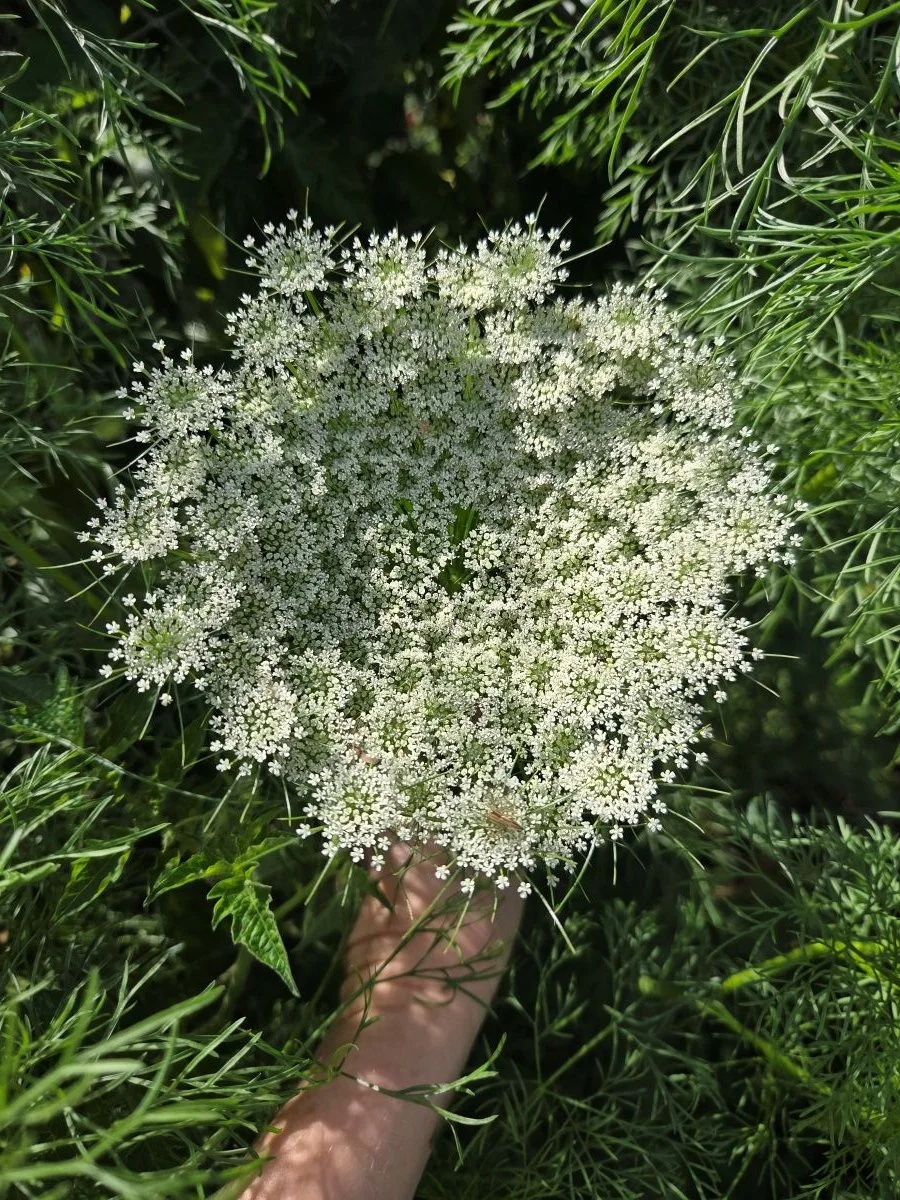
Ammi majus is native to Mediterranean regions of North Africa, Southern Europe and across into Asia. Historically in Egypt it was used medicinally for skin problems. The plant contains compounds which can cause photosensitivity and skin reactions and was used to treat vitiligo (by stimulating melanin production) amongst other ailments. It can also cause chronic inflammation, blisters, and burns, so you know, don’t try it at home.
The genus name Ammi is said to come from the Greek word ‘ammos’ meaning sand, because it loves a sandy, well-drained soil. Plants grow and flower best in full sun but will tolerate light or partial shade. Like its carrot cousins, Ammi majus has a long taproot and dislikes root disturbance so it’s best to sow directly, usually in Autumn (especially here in the subtropics). In cooler climates you can sow in early spring for a summer display. This year’s batch at my place are the self-sown babies from last year’s flowers, and they are bigger and better!