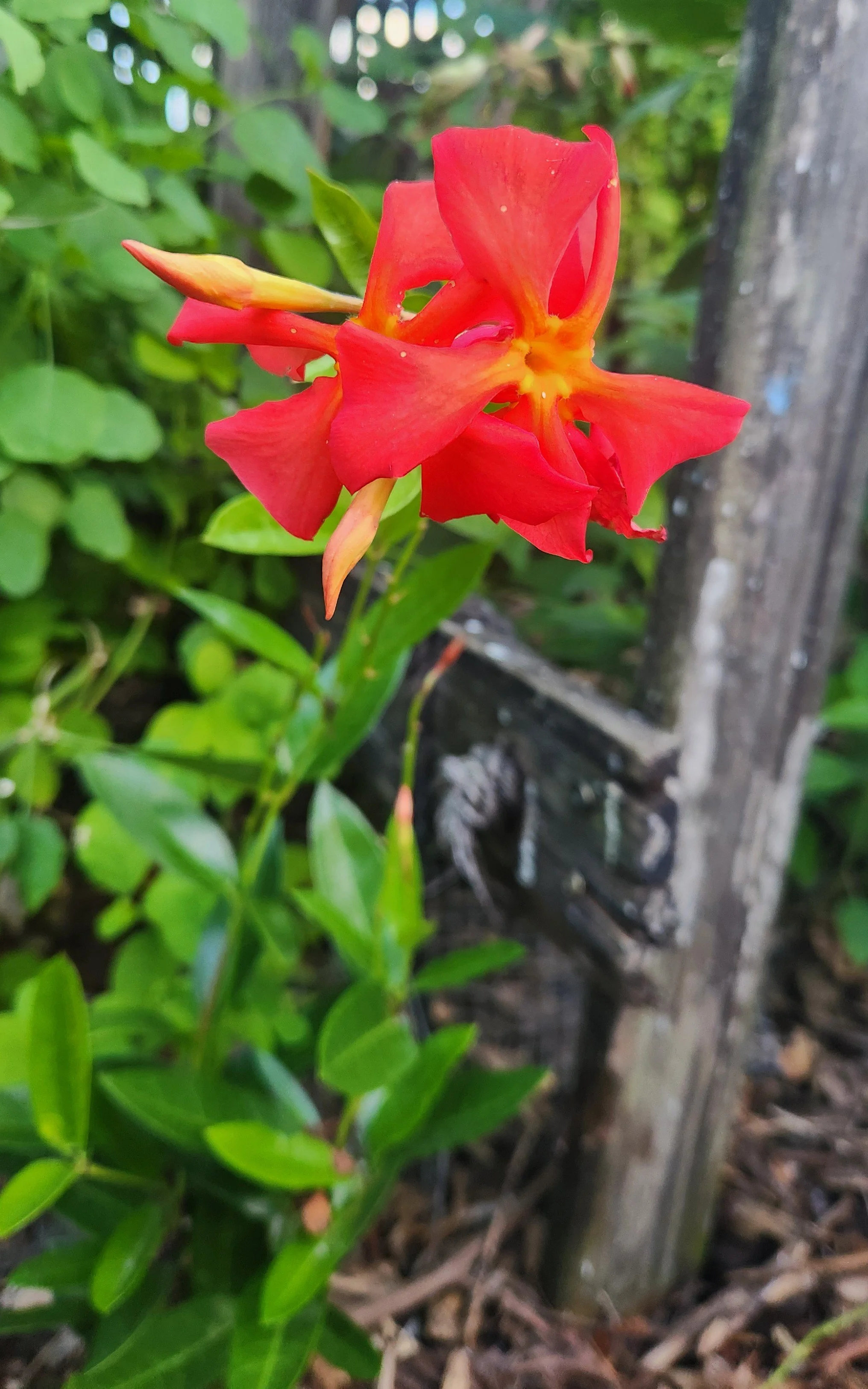
Marvellous Mandevilla
Every gardener has a few nemesis plants. Ones they love but kind of struggle to grow. Mandevilla is one of mine. Granted I’ve only ever bought brand new cultivars for my garden - so maybe I can get away with blaming it on plant genetics, but there are a few in clients gardens that have had their ups and downs and I generally just hope they don’t die on my watch.
They are supposedly low maintenace and somewhat drought tolerant due to their tuberous roots but I find they do quite like regular water. Especially in pots. There is a house down the road that has a few deep pink mandevilla in short round pots along the driveway. There is not much else going on in that garden so I wouldn’t think anything special happens to those mandevillas but surely they are watered regularly (?) and boy do they thrive!
Mandevillas are a member of Apocynaceae (with franjipanis, oleander, and star jasmine/trachelospermum) - so they have milky sap when the stems are cut and aren’t exactly something you or your pets want to get caught eating. They probably won’t kill anyone but might give an upset tummy.
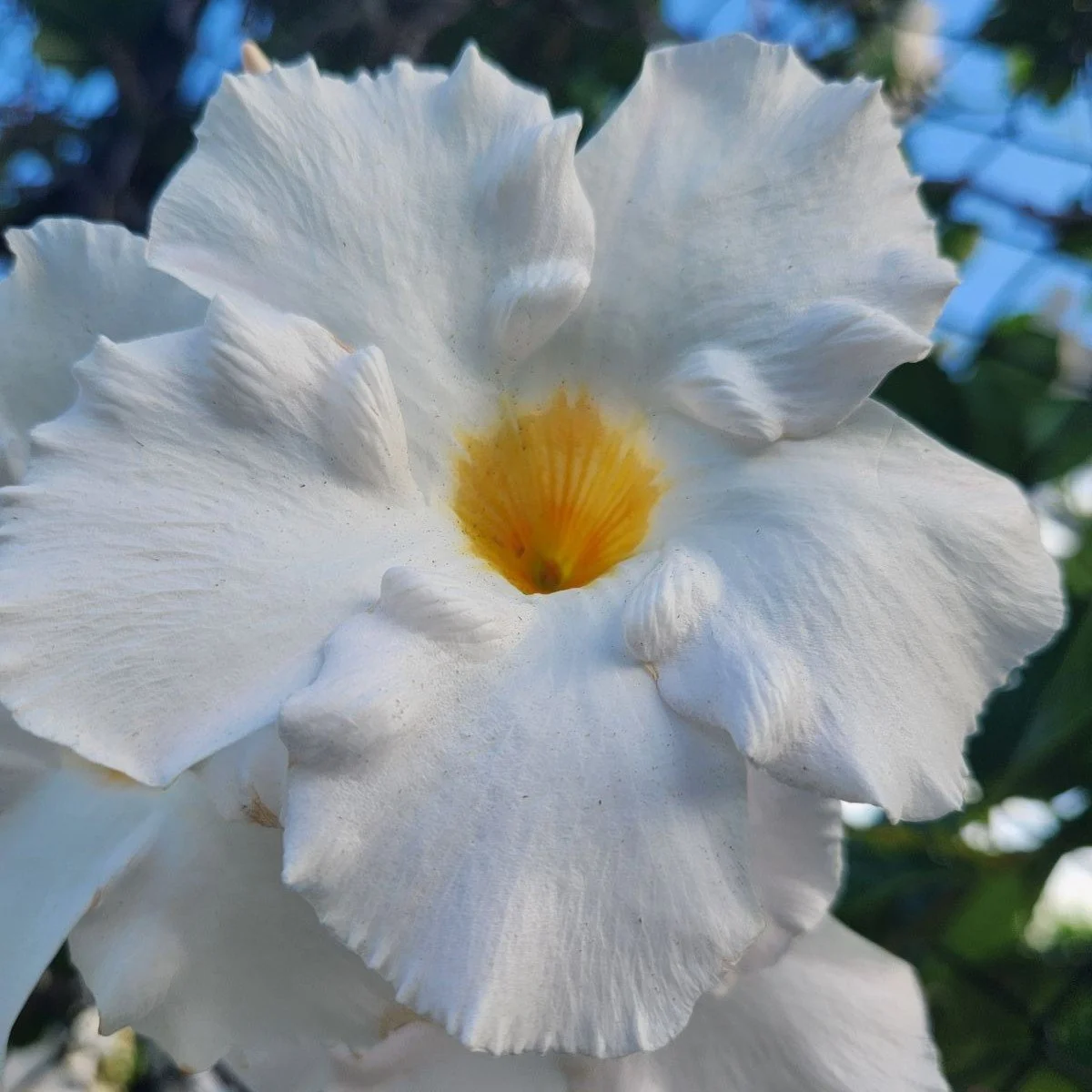
There is some confusion to the difference between dipladenias and mandevillas, with the general consensus being that mandevillas are the big climbers and dipladenias are more compact, with a bushier growth habitat. In formal classification world, all dipladenias have now been re-classified under mandevilla, but what’s in a name? They’re all native to the tropical and sub-tropical regions of the American continents and West Indies.
The flowers come in colours from white to yellow, apricot, pink and red and some species are beautifully fragrant (look for M. laxa or Chilean jasmine). They are happy in full sun, though can tolerate partial shade in the hotter climates, and need consistent moisture in keeping with their tropical origins (see my previous opinion of disbelief to any ‘drought tolerant’ claims. Ignoring climate change, does the tropics ever really dry out?).
At any rate they are worth a shot. If you have a big fence to cover, try something like Mandevilla ‘White Fantasy'. Or if you are after pots of colour, the M. sanderi “Diamantina” stays around 50cm tall. I’ve just put in a new hybrid ‘Sun Parasol’ in a bright orangey-coral colour which I’m hoping will scramble over a short ladder nearby. Fingers cross I keep this one alive!